

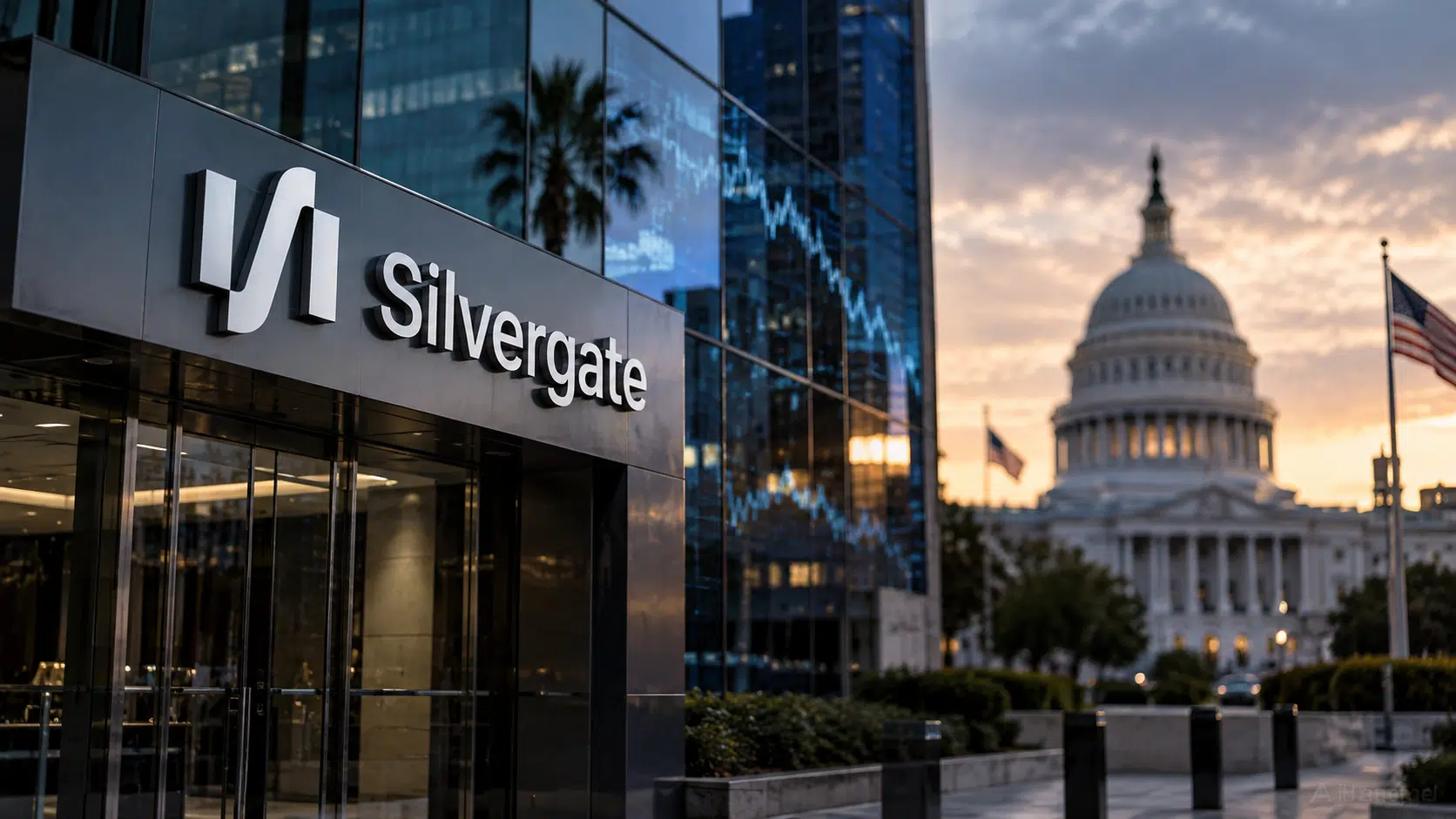
Former Silvergate Bank CEO Alan Lane has challenged the regulatory narrative surrounding the crypto lender’s 2023 closure, saying the bank had the financial resources to continue operating but ultimately chose to shut down under pressure from the Biden administration.
Lane made the allegations Tuesday in his debut Substack article, accusing the Biden administration of orchestrating a campaign against Silvergate that ultimately contributed to its liquidation. He said political forces influenced the decision to close the bank even though it had already weathered an exceptional surge in customer withdrawals.
During the fourth quarter of 2022, Silvergate met withdrawals amounting to roughly 70% of its demand deposits, according to Lane. He argued that doing so without becoming insolvent demonstrated that the bank could have continued operating.
Silvergate disclosed the severity of the deposit exodus in an operational report released in early 2023. Deposits from digital-asset clients had fallen to $3.8 billion by Dec. 31, compared with $11.9 billion at the close of the previous quarter, representing a 68% decline.
Meeting withdrawal demands required Silvergate to draw heavily on its balance sheet. Asset disposals during the quarter generated a $718 million loss as the bank sold $5.2 billion from its debt-investment portfolio. By year-end, its liquidity position included $4.6 billion in cash and assets readily convertible to cash. Lane said additional liquid assets were available to either sell or pledge against borrowing when liquidity was needed.
His explanation for Silvergate’s demise conflicts with conclusions later reached by federal investigators, who identified vulnerabilities inside the bank itself rather than attributing its liquidation to government efforts against the crypto industry.
Regulatory Record Challenges Lane’s Account of Silvergate
In a report issued in September 2023, the Federal Reserve’s inspector general identified a combination of factors behind Silvergate’s decision to liquidate. The review pointed to the bank’s dependence on deposits from digital-asset businesses, its rapid growth, and vulnerabilities arising from several forms of funding exposure.
The report also identified weaknesses in the bank’s risk controls, corporate governance, and risk-management practices. It faulted regulators as well, concluding that supervisors could have intervened earlier and responded more forcefully as the bank’s vulnerabilities emerged.
Lane has also pushed back against criticism of Silvergate’s anti-money laundering controls, maintaining that regulators never proved the bank’s AML framework had failed.
Regulatory enforcement nevertheless followed after the bank’s closure. In July 2024, the Securities and Exchange Commission accused Lane, Silvergate Capital, and former chief risk officer Kathleen Fraher of misleading investors about the effectiveness of the bank’s Bank Secrecy Act and AML compliance program and its oversight of crypto customers, including FTX.
The SEC alleged that Silvergate’s automated transaction-monitoring system failed to screen payments totaling more than $1 trillion on the bank’s payments network. The regulator also claimed that nearly $9 billion worth of potentially suspicious activity linked to FTX-affiliated entities went undetected.
Lane resolved the SEC case without admitting or denying the regulator’s allegations. The resolution required him to pay a $1 million civil penalty and barred him from serving as an officer or director for five years.
Silvergate separately faced action from the Federal Reserve, which imposed a $43 million penalty over deficiencies in the bank’s transaction-monitoring practices. The Fed later said Silvergate completed its liquidation, repaid all customer deposits and ceased operating as a bank.
Lane Points to 2023 Crypto Banking Warnings
Lane’s case for government pressure goes beyond Silvergate’s treatment by regulators. He cited joint guidance issued by federal banking agencies in early 2023 as evidence, in his view, of a broader effort to constrain the crypto sector.
The guidance warned banks about risks associated with crypto-related activities. The Federal Reserve, however, said banking organizations were neither prohibited nor discouraged from serving any particular customer category.
The agencies withdrew the statements in April 2025.
DisClamier: This content is informational and should not be considered financial advice. The views expressed in this article may include the author’s personal opinions and do not reflect The Crypto Basic opinion. Readers are encouraged to do thorough research before making any investment decisions. The Crypto Basic is not responsible for any financial losses.
 Bitcoin
  Ethereum
  Tether
  BNB
BNB  XRP
XRP  USDC
USDC  Solana
  TRON
TRON  Figure Heloc
  Zcash
Zcash 