

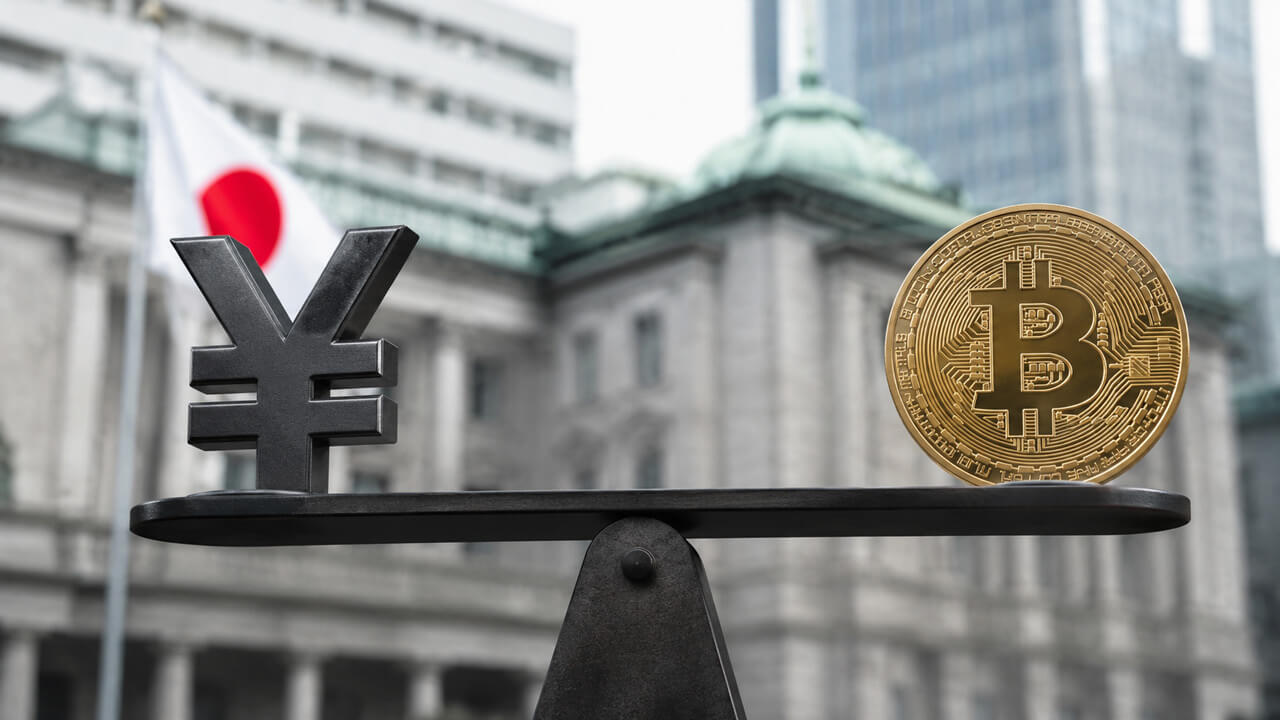
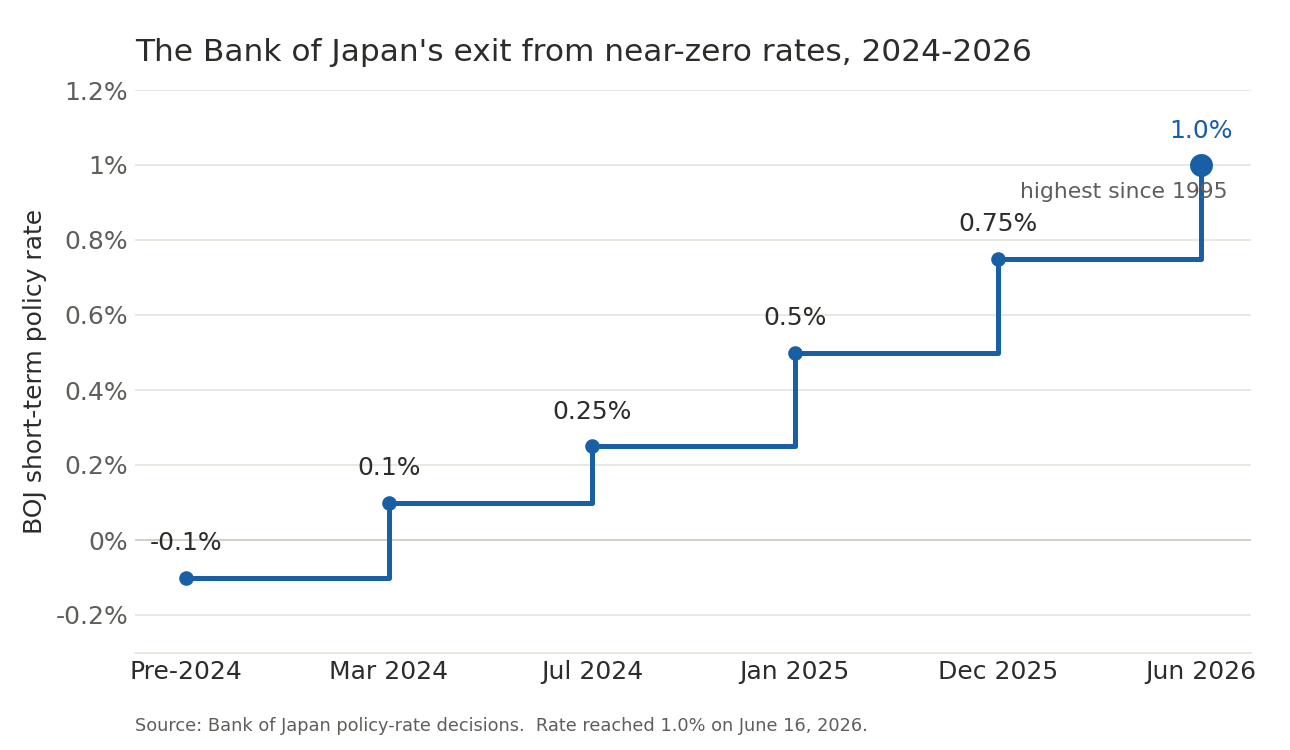
The Bank of Japan raised its benchmark interest rate to 1% on June 16, the highest level the country has seen since September 1995 and the furthest point yet in a normalization campaign that has slowly dismantled three decades of near-free money.
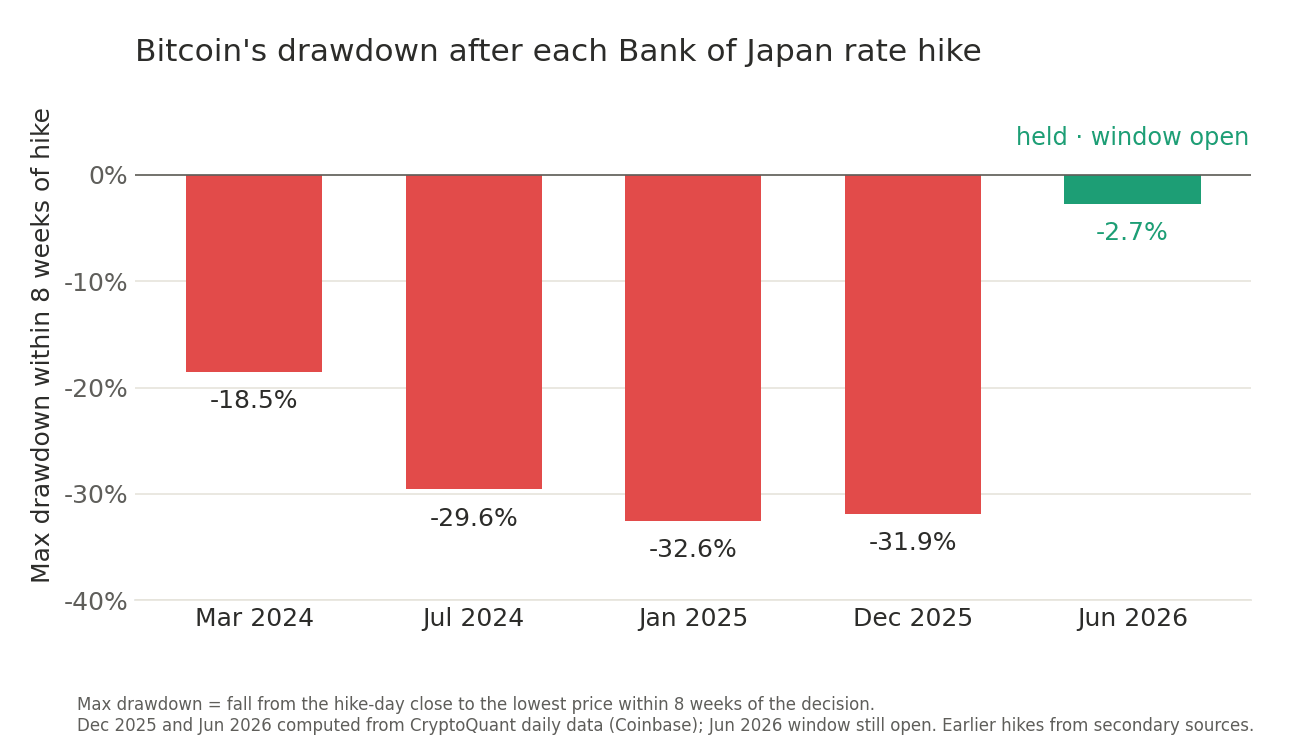
Going into the decision, the track record pointed one way: every one of Governor Kazuo Ueda’s rate increases since March 2024 had been followed by a Bitcoin drawdown of 18% to 33%, and the August 2024 surprise hike sent the price from roughly $64,000 to $49,000 inside 48 hours, erasing around $600 billion in crypto market value.
This time the pattern broke, with Bitcoin dipping briefly in the Asian session before recovering to trade near $66,000, close to where it had sat before the announcement.
Japanese monetary policy reaches Bitcoin through one of the most powerful funding channels in global finance, and a quarter-point move to a 31-year high is the kind of event that has rekt crypto before. The hike was held without triggering the usual chaos because of how the BOJ packaged it, and the calm leaves a much larger question hanging over where Japan’s exit from cheap money eventually leads.
Why a BOJ rate decision lands on crypto screens worldwide
For most of the modern crypto era, Japan was the cheapest source of funding on the planet. Investors borrowed yen at rates pinned near zero, converted the proceeds into dollars or other higher-yielding assets, and pocketed the difference, a structure known as the yen carry trade.
That borrowed money went into US equities, emerging-market debt, and crypto, where the same leveraged macro funds shorting the yen often held long Bitcoin positions at the same time.
When Japanese rates climb, that trade falls apart. As borrowing yen becomes more expensive, the currency tends to firm up, and funds with leveraged positions can be forced to cut exposure across everything they hold at the same time.
Bitcoin is almost always the first to absorb that selling because it trades around the clock and sits inside leveraged books that need to raise cash fast. We saw that in August 2024, when one surprise hike set off a cascade that erased a large slice of the crypto market in two days and led to more than $1 billion in liquidations.
Energy costs and a sliding yen drove the BOJ’s decision to act now, with Japan’s producer price index rising 6.3% year-on-year in May, the fastest pace in more than three years, driven by oil costs tied to the US-Iran conflict. Headline inflation came in at 1.4% in April, the fourth straight month below the bank’s 2% target, held down by government measures such as scrapping the gasoline tax and eliminating public high-school tuition.
The BOJ is raising interest rates in response to an inflation reading that remains below its target. This shows us just how worried policymakers are about energy prices feeding through to everyday goods and about a yen that had slid back toward the 160-per-dollar level that previously triggered intervention. The board approved the increase in a 7-1 vote, with Ueda absent while recovering from a hospital stay and Deputy Governor Shinichi Uchida fronting the press conference.
Market positioning ahead of the meeting raised the stakes on both sides, since speculative yen short positions had climbed to roughly 115,000 contracts, the highest since November 2017, and a yen rally could have forced a painful unwind across risk assets.
The opposite read had support too, because Bank for International Settlements data showed yen-denominated foreign-currency credit contracted by 4.9% during 2025, leaving the carry complex feeding global leverage smaller than it was during the 2024 blowups and softening the impact of any forced exit.
Why Bitcoin held this time, and why the next hike is the real test
Bitcoin held because of one feature buried in the announcement. Alongside the rate increase, the BOJ paused the taper of its government bond purchases and committed to buying around 2 trillion yen of Japanese government bonds a month from April 2027, a move markets saw as an effort to cap upward pressure on long-term yields even as short-term policy tightens.
Long-dated Japanese yields have been the real pressure point for global leverage, and capping them blunted what would otherwise have been a purely hawkish decision. The hike was almost fully priced anyway, with market-implied odds above 90% in the days beforehand, and a cooling of the US-Iran conflict pulled some of the energy-shock risk off the table.
The Nikkei 225 added 0.46% after the decision, and the yen firmed only marginally to 160.22 against the dollar, both consistent with a market reading the package as controlled.
Japan’s weight in crypto comes from regulation and funding far more than raw trading volume. The country runs one of the oldest licensing regimes for crypto exchanges, with around 16 licensed venues, including bitFlyer, Coincheck, Bitbank, GMO Coin, and BTCBOX, serving a large and experienced retail base.
IMARC valued the country’s crypto exchange market at roughly $3.66 billion in 2025 and projected it could reach about $28.07 billion by 2034, a compound growth rate above 25%. Tokyo continues to tighten the regulatory framework, and on June 11, Japan’s lower house passed legislation to treat digital assets more like securities. Japan views Bitcoin mainly as a yen-linked, heavily regulated node within a much larger global liquidity system.
The consequences of continued tightening will be felt well past Tokyo. If the BOJ keeps lifting rates, yen-funded leverage will become less attractive, and the pool of borrowed money flowing into risk assets will shrink.
Rising Japanese yields can pull capital back home and push global investors to rethink bond allocations, and bond-market stress tends to spill over into equities and crypto. Japan’s normalization also hands crypto traders a second gauge of global liquidity on top of the Federal Reserve, which still commands most of their attention.
The real risk is cumulative: a single 1% hike leaves Bitcoin intact, but a string of them could reshape the cheap-money backdrop that let risk assets expand in the first place.
Bitcoin’s composure on June 16 stemmed from a dovish bond-market hike fully anticipated by traders, and it failed to put a dent in the market’s appetite for risk.
The harder test showed up within a day, and it came from Washington. On June 17, the Federal Reserve held its rate at 3.5% to 3.75%, but Kevin Warsh used his first meeting as chair to strip the easing bias out of the statement and lift the year-end dot-plot median to 3.8%, with nine of 18 officials now projecting at least one hike in 2026, and the PCE inflation forecast was raised to 3.6%.
Bitcoin saw that as the real threat, sliding toward $64,000 by June 18 even as a signed US-Iran peace deal lifted equities, with spot Bitcoin and Ether ETFs shedding a combined $111 million on the day of the decision.
The carry-trade stress test passed cleanly, and the tightening it warned about came anyway from the other side of the Pacific. Japan’s era of nearly free money won’t vanish in a single afternoon, but every step away from it redraws the liquidity map Bitcoin trades inside.
 Bitcoin
  Ethereum
  Tether
  BNB
BNB  XRP
XRP  USDC
USDC  Solana
  TRON
TRON  Figure Heloc
  Zcash
Zcash 