

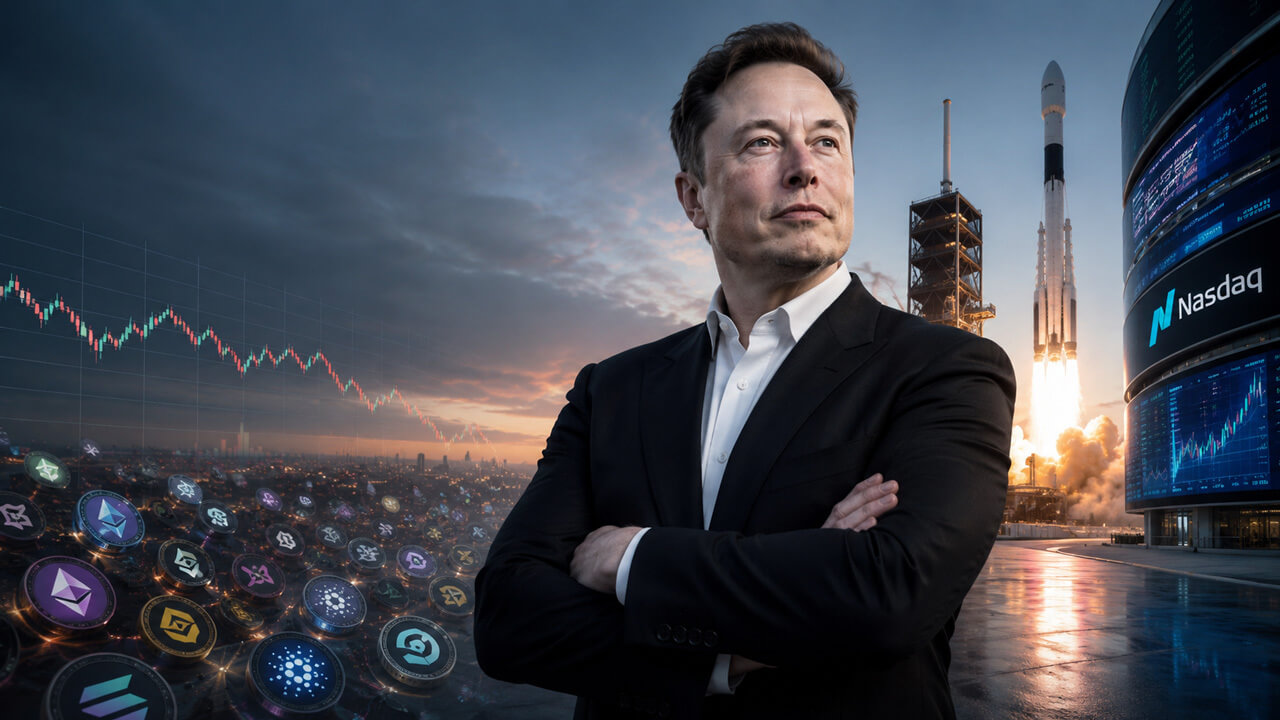
Elon Musk has become the first person in modern history to amass a personal net worth exceeding $1 trillion, crossing the historic threshold on Friday following the record-breaking public market debut of SpaceX.
According to the Bloomberg Billionaires Index, the technology executive’s total fortune now stands at $1.11 trillion.
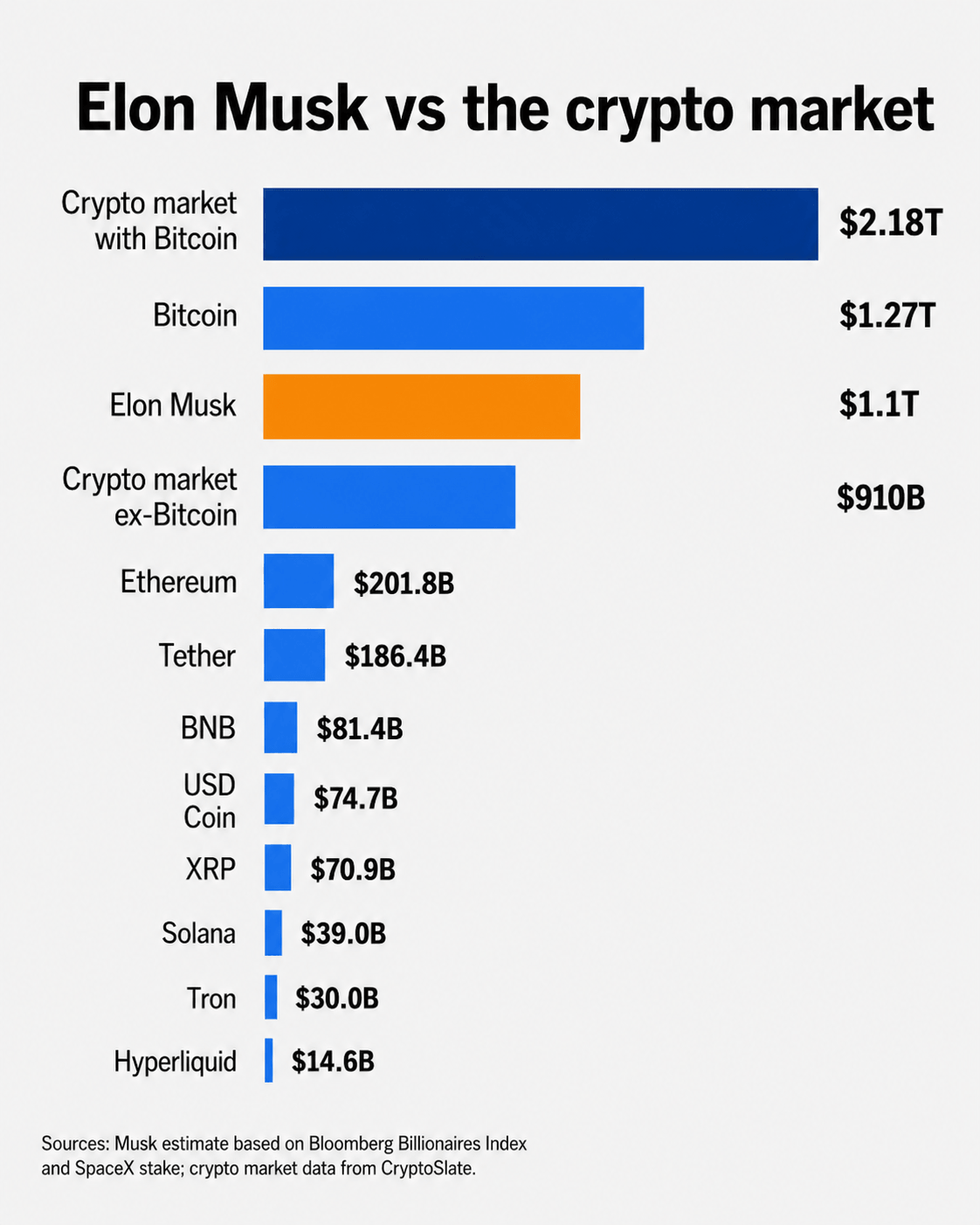
To put the unprecedented scale of this capital into perspective, Musk’s net worth is now above that of the total market capitalization of the global cryptocurrency sector when excluding Bitcoin. When including the world’s largest digital asset, his wealth accounts for exactly half the value of the entire crypto industry.
The financial milestone immediately reignited global discourse regarding wealth concentration, as Musk’s financial footprint now eclipses the gross domestic product of several developed nations.
SpaceX’s IPO shatters records
The immediate catalyst for the surge in Musk’s wealth was SpaceX’s highly anticipated listing on the Nasdaq stock exchange.
The rocket, telecommunications, and artificial intelligence company achieved a staggering $2.2 trillion valuation upon entering the public market.
Underwriters initially priced the offering at $135 per share, successfully raising $75 billion before the open.
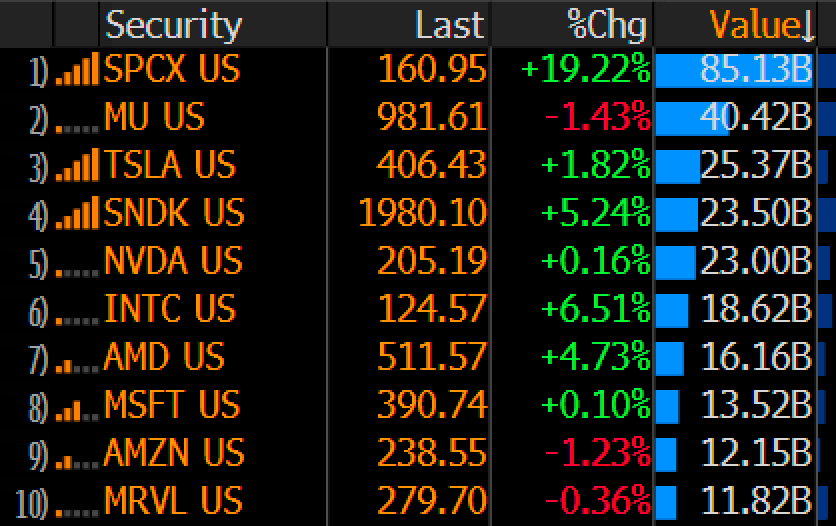
However, immense investor appetite for the commercial space sector and Musk-affiliated ventures drove the opening trade to $150. Shares surged to an intraday peak of $176.50 before settling at a Friday close of $161.
Market observers pointed out that the stock debut generated unprecedented liquidity.
Bloomberg ETF analyst Eric Balchunas noted that the stock logged $85 billion in trading volume on its first day. The figure sets an IPO record and ranks among the top 10 highest single-day trading volumes for any individual stock in market history, exceeding Apple’s peak single-day volume over the last 40 years.
Meanwhile, Musk retains a 42% ownership stake in the Hawthorne, California-based company. This equity position grants him essentially unilateral voting control over the firm’s operational and strategic decisions.
Musk’s crypto ties
The comparison between Musk’s fortune and the digital asset market highlights a significant shift in capital allocation over the past year.
Musk’s $1.11 trillion paper fortune comfortably exceeds the estimated $880 billion market capitalization of all alternative cryptocurrencies tracked by TradingView’s TOTAL2 index.
Even under broader metrics from data provider CoinGecko, which values the total crypto market near $2.27 trillion and Bitcoin at $1.28 trillion, the remaining altcoin sector sits below the SpaceX CEO’s personal net worth.
This divergence underscores how far the broader altcoin market has fallen from its prior cyclical valuations. TradingView data shows that the market capitalization of crypto assets excluding Bitcoin peaked above $1.7 trillion in October 2025.
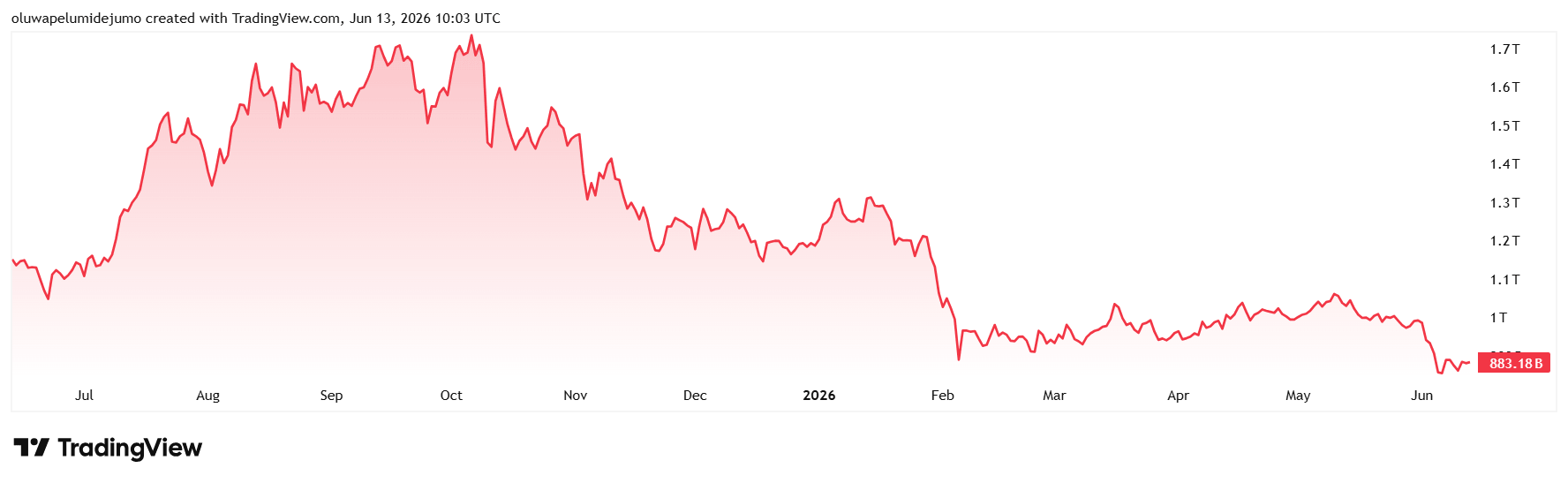
It has since declined by roughly half, reflecting diminished liquidity in digital assets and a broader institutional rotation toward large-cap technology and artificial intelligence equities.
Despite his individual wealth dwarfing the altcoin economy, Musk remains structurally tied to digital asset networks through both personal portfolios and corporate balance sheets.
Musk has publicly confirmed personal holdings in Bitcoin, Ethereum, and Dogecoin. While his private balances remain undisclosed, outside of a legacy 2018 statement regarding a gift of 0.25 Bitcoin, his corporate entities carry an institutional footprint.
Post-IPO regulatory filings revealed that SpaceX maintains a corporate treasury reserve of 18,712 Bitcoin, an allocation valued at more than $1.3 billion. This strategy aligns with his electric vehicle manufacturer, Tesla, which continues to hold 11,509 Bitcoin as part of its liquid treasury reserves.
If the two firms were to merge, they would rank as the 5th largest public corporate holder of the top cryptocurrency.
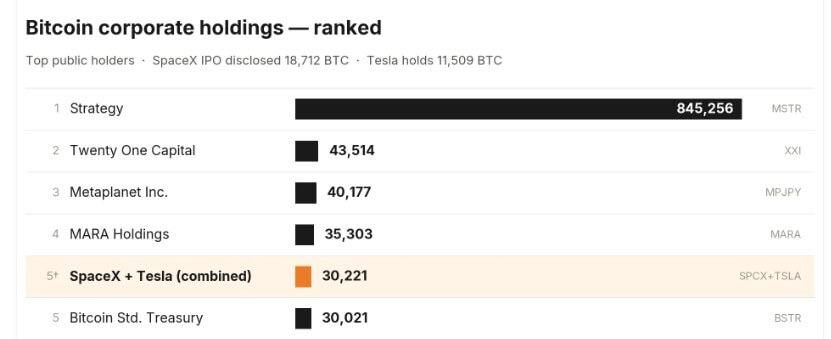
Additionally, Musk has leveraged his $44 billion acquisition of the social media platform X to embed financial data tools directly into public discourse. The platform’s “cashtags” feature provides real-time market pricing for traditional equities and digital assets.
While X corporate statements clarify that the platform acts strictly as a data utility rather than a direct brokerage or digital currency exchange, the integration serves to further link Musk’s media and corporate ecosystem to the daily mechanics of the financial markets.
Ultimately, the scale of Musk’s fortune highlights the profound concentration of private wealth around founder-controlled technology monopolies, emphasizing that this historic net worth remains closely bound to equity market prices rather than liquid cash.
 Bitcoin
  Ethereum
  Tether
  BNB
BNB  XRP
XRP  USDC
USDC  Solana
  TRON
TRON  Figure Heloc
  Zcash
Zcash 