

Quantum Blockchain Technologies PLC (AIM:QBT) has moved from simulation testing and has started live experimental Bitcoin mining using a standard version of the SHA-256 algorithm.
The main purpose of the mining activity is to collect real time data to populate the company’s existing Big Data database, which is then used by the research & development team with machine learning and data analysis tools.
Quantum said this development has led to the first two knowledge-based algorithms, which govern the SHA-256 (secure hash algorithm 256) computation, being deployed, with mine testing now taking place.
This is the final step of nearly a year’s work by one of the company’s two machine learning teams, Quantum said. A third machine learning team, which started work earlier this year on an alternative solution to the two machine learning methods has already delivered some innovative results.
Subject to the confirmation of current testing, it is expected that two new patent applications will be filed as soon as practicable. The company expects to shortly commence real Bitcoin mining using what it calls Method ‘A’, i.e. not the alternative solution being developed by the third machine learning team, performed on the latest generation of graphics processing units and field-programmable gate arrays.
Meanwhile, work on the Quantum version of the SHA-256 algorithm is ongoing, and it is expected that a patent application will be filed once the company achieves theoretical confirmation. Importantly, the company has been performing simulations on an extremely scaled-down simulated Quantum version of the SHA256 algorithm, which have produced exact results (instead of approximate results which are more typical with this type of computation) for the first time; the company described this as “a milestone achievement” for Quantum Blockchain (QBT).
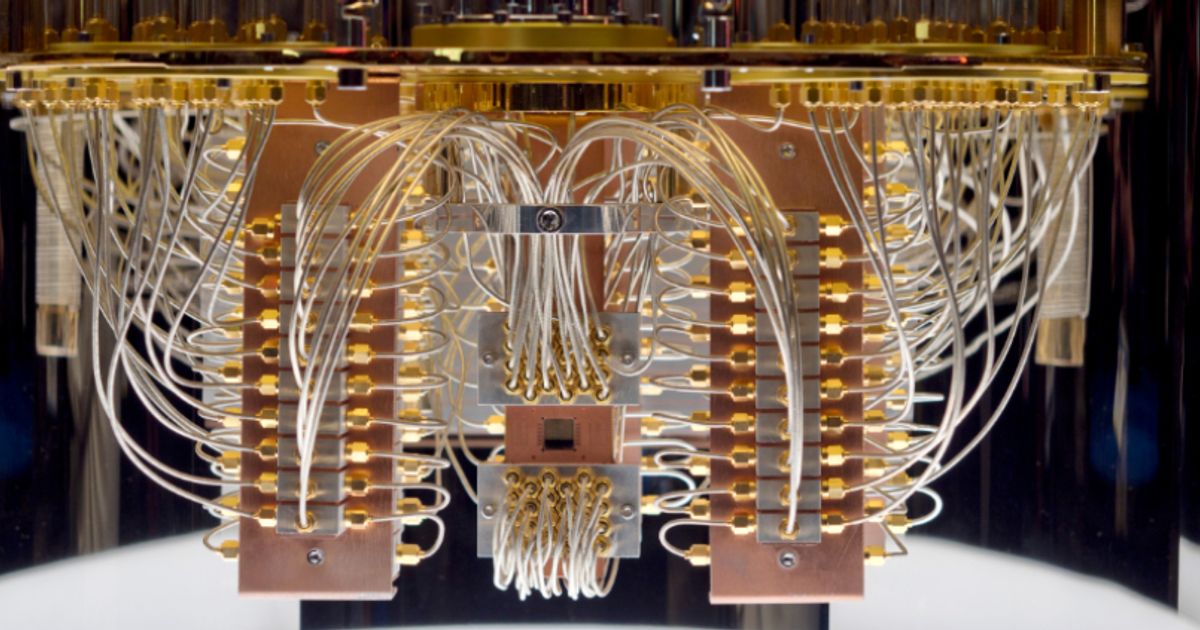
During the next two months, the company is aiming to get theoretical evidence of whether the number of Qubits available on the next generation of commercial quantum computers (expected to be released into the market in 2023), will be enough to sustain the company’s full SHA-256 computation.
The filing of the second patent for the SHA-256 optimisation has been put temporarily on hold, pending results of the performance of potential improvements which the company believes are an alternative to an existing patent, and within a similar speed and energy consumption order of magnitude.
#QBT . Interesting RNS today .
“Francesco Gardin CEO of Quantum Blockchain Technologies …QBT is addressing an opportunity which represents a step-change for the Bitcoin mining industry”????
— Colonelchaos (@Colonelchaos3) May 23, 2022
“QBT is addressing an opportunity which represents a step-change for the Bitcoin mining industry, and where our competitors have invested several years, hundreds of researchers and engineers, as well as tens of millions of pounds. After just one year, QBT is already in a position to start its knowledge-based Bitcoin mining, using what we believe to be a unique and novel approach. The results of our Bitcoin mining endeavours during the next few months will determine the real value of our approach,” said Francesco Gardin, the chief executive officer and executive chair of Quantum Blockchain.
“At the same time, we continue to improve the chip design of ASIC based traditional mining by optimising the SHA-256 algorithm and its silicon implementation. Our Quantum computing team has now successfully achieved its first correct quantum computation of a reduced size version SHA-256 and is now scaling up to the full SHA-256.
“The complexity of the task makes predicting the timeframe for publishing new results and operational updates difficult,” Gardin conceded.
“We strongly believe that our efforts are taking QBT into a new direction of Bitcoin mining and ask for shareholders’ patience until these efforts are rewarded by success,” he added.
Shares in the company soared 30% to 2.4p in early deals.
 Bitcoin
  Ethereum
  Tether
  BNB
BNB  XRP
XRP  USDC
USDC  Solana
  TRON
TRON  Zcash
Zcash  Figure Heloc