

XRP appears to be defying established market behaviors, as its price spikes alongside exchange inflows.
XRP is showing a pattern that goes against how most crypto assets behave, especially when looking at exchange flows. Notably, instead of rising when tokens leave exchanges, the XRP price seems to increase when more tokens move into exchanges.
Key Points
- XRP’s price seems to increase during exchange inflows and decrease when tokens flow out of exchanges.
- Data shows the XRP price rose from $0.551 to $0.688 between January and March 2024, while exchange reserves increased from 2.65 billion to over 3 billion tokens.
- In the ongoing downturn starting in October 2025, XRP has fallen from $2.8 to about $1.4, while reserves have dropped from 3 billion to 2.79 billion XRP.
- Rising inflows alongside rising prices suggest the market is seeing strong activity, where demand absorbs supply despite more tokens entering exchanges.
- When demand weakens after high inflows, earlier deposits begin to add selling pressure, leading to price slowdowns or reversals.
XRP Price Following Exchange Flows
XRP community analyst Xaif called attention to this data while citing a report from CryptoQuant. Notably, in most cases, when investors move assets off exchanges, it suggests they plan to hold for a longer time. This reduces selling pressure and often supports price growth.
However, XRP does not seem to follow this pattern. Instead, its price often rises as more tokens flow into exchanges and falls when those tokens leave. This unusual behavior suggests that the usual supply and demand signals may not accurately track XRP’s price action.
The market pundit also pointed out that before XRP sees a massive price explosion, both inflows and outflows often surge in tandem with each other. “On paper, people are NET SELLING into the pump. So who’s buying?” He asked, suggesting that something else is behind these moves.
According to Xaif, many traders misunderstand XRP by applying the same approach they use for assets like Bitcoin (BTC). According to him, XRP does not behave the same way, and traders who rely on standard on-chain indicators could get the wrong read on the market.
Historical Data Supports the Pattern
Historical data helps confirm this trend. Figures from Binance show that between Jan. 18, 2024, and March 10, 2024, XRP reserves on the exchange increased from 2.65 billion tokens to over 3 billion tokens. During the same period, the price rose from $0.551 to $0.688, moving in the same direction as the rising reserves.
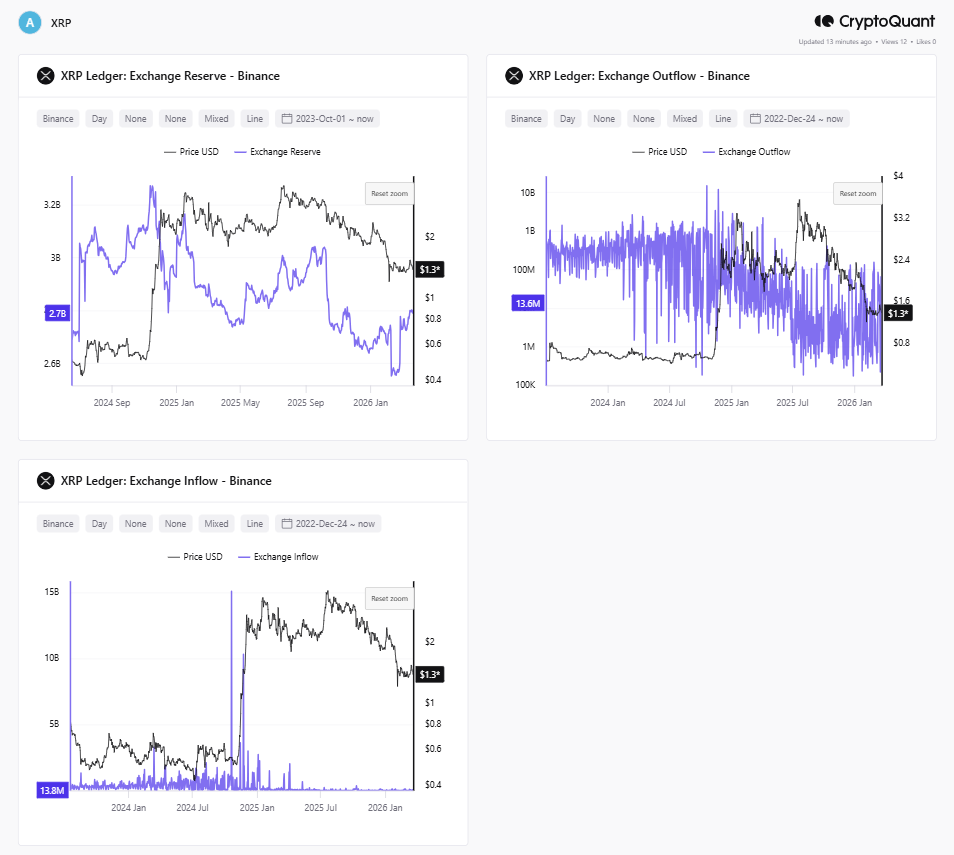
A similar pattern appeared during the rally between November 2024 and January 2025. Specifically, XRP’s price jumped from $0.5 to $3.4, while Binance’s reserves increased from 3 billion tokens to 3.2 billion tokens. While the rise in reserves was smaller compared to the price jump, both still moved upward together.
The trend has continued amid the decline that started in October 2025. Notably, XRP’s price has dropped from $2.8 to about $1.4, while Binance reserves have also fallen from 3 billion XRP to 2.79 billion XRP.
What Could Be Driving This Behavior
This pattern suggests that XRP’s investors start locking profits whenever XRP spikes. Specifically, during price rallies, traders and large holders often move tokens onto exchanges to take profits as the prices rise. However, these inflows do not immediately push prices down because strong demand absorbs the supply.
As a result, both buying and selling can stay high at the same time. Essentially, prices continue to rise while more tokens enter exchanges because buyers are still active enough to match the selling. In this phase, the inflows show strong market activity, not immediate weakness.
However, once the initial demand begins to slow, the situation changes. The tokens that traders moved into exchanges earlier start to have a stronger effect. The selling pressure builds, and prices begin to stall or fall. This is when earlier inflows start to weigh on the market.
DisClamier: This content is informational and should not be considered financial advice. The views expressed in this article may include the author’s personal opinions and do not reflect The Crypto Basic opinion. Readers are encouraged to do thorough research before making any investment decisions. The Crypto Basic is not responsible for any financial losses.

 Bitcoin
  Ethereum
  Tether
  BNB
BNB  XRP
XRP  USDC
USDC  Solana
  TRON
TRON  Figure Heloc
  Hyperliquid