

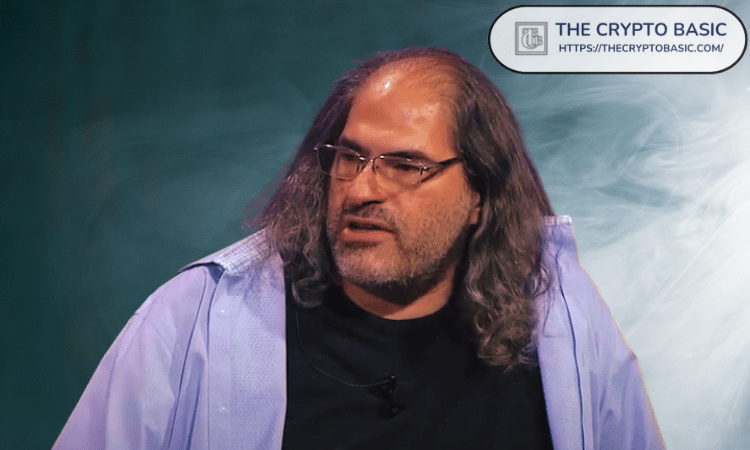
David Schwartz, Ripple’s Emeritus Chief Technology Officer, has described Bitcoin as “a technological dead end,” reigniting debate across the crypto sector.
His remarks, posted on social platform X, come during a heated exchange over the decentralization of the XRP Ledger (XRPL).
Key Points
- David Schwartz described Bitcoin as “largely a technological dead end,” emphasizing adoption over technical innovation.
- An early XRPL software bug led to the loss of the first 32,569 ledgers, sparking criticism of XRPL’s decentralization.
- Schwartz defended XRPL, saying the network continued without a rollback, reflecting practical decentralization.
- He contrasted this with Bitcoin, which required coordinated interventions after its 2010 bug and 2013 overflow incident.
- The discussion highlights ongoing debates over what constitutes true decentralization in blockchain networks.
Schwartz Questions Bitcoin’s Technological Importance
The discussion began with a question from XRP community member Khaled Elawadi. He asked Schwartz whether he had considered contributing to Bitcoin development again after co-creating the XRPL.
Schwartz responded, “Not really.” From there, the exchange shifted to Bitcoin’s broader technical direction.
Specifically, Schwartz said he believes Bitcoin is “largely a technological dead end,” arguing that innovation at the blockchain layer no longer plays a decisive role in Bitcoin’s success. To illustrate his view, he compared Bitcoin to the U.S. dollar. In both cases, he suggested, adoption and network strength outweigh technical design.
Not really. I think bitcoin is largely a technological dead end for the same reason the dollar is. The technology just doesn’t seem to matter all that much to its success, at least not at the blockchain layer.
— David ‘JoelKatz’ Schwartz (@JoelKatz) February 12, 2026
XRPL Ledger History Comes Under Scrutiny
Schwartz’s remarks surfaced amid an ongoing dispute with Bitcoin advocate Bram Kanstein. In particular, the disagreement centers on whether XRPL is truly decentralized.
Kanstein has claimed that XRPL’s effective history starts at Ledger 32,570. He pointed to an early software bug that led to the loss of the first 32,569 ledgers. Consequently, Kanstein views the adjusted starting point as evidence of centralized control.
However, Schwartz pushed back against that interpretation, describing the incident as a technical glitch from the network’s early days. He explained that participants chose not to implement coordinated changes after the issue surfaced. Instead, they continued operating from the existing ledger state.
According to Schwartz, that decision reflects decentralization in practice. He maintained that the community accepted the outcome without orchestrating a rollback.
Bitcoin’s Past Incidents Enter the Debate
To strengthen his argument, Schwartz pointed to Bitcoin’s own history. He referenced the 2010 bug that led to a coordinated rollback of the Bitcoin blockchain. He also mentioned the 2013 value overflow incident.
Schwartz noted that both events required collective action to resolve critical flaws. In his view, these episodes show that even Bitcoin has faced moments requiring coordinated intervention.
Taken together, his comments suggest that no blockchain is entirely insulated from governance challenges. Ultimately, the exchange has revived long-standing tensions between XRP and Bitcoin supporters. More broadly, it underscores the continuing debate over what true decentralization means in practice.
DisClamier: This content is informational and should not be considered financial advice. The views expressed in this article may include the author’s personal opinions and do not reflect The Crypto Basic opinion. Readers are encouraged to do thorough research before making any investment decisions. The Crypto Basic is not responsible for any financial losses.
 Bitcoin
  Ethereum
  Tether
  BNB
BNB  XRP
XRP  USDC
USDC  Solana
  TRON
TRON  Zcash
Zcash  Figure Heloc