

Bitcoin’s network has become slightly harder to mine, with the latest difficulty rising to a little over 148 trillion. Block times are currently averaging about 9.95 minutes, a little below the network’s 10-minute goal, prompting the adjustment to slow mining slightly.
Projected Difficulty Rise
Bitcoin adjusts its mining difficulty every 2016 blocks, roughly every two weeks, to keep the average block time near 10 minutes. When blocks are added too quickly, the network raises difficulty; when they fall behind, it lowers it.
Right now, miners are adding blocks a bit faster than the target, which means the network will increase the challenge to keep production steady.
Based on CoinWarz estimates, the next adjustment on January 8, 2026, at block 931,392, is expected to push the difficulty to past 148 trillion.
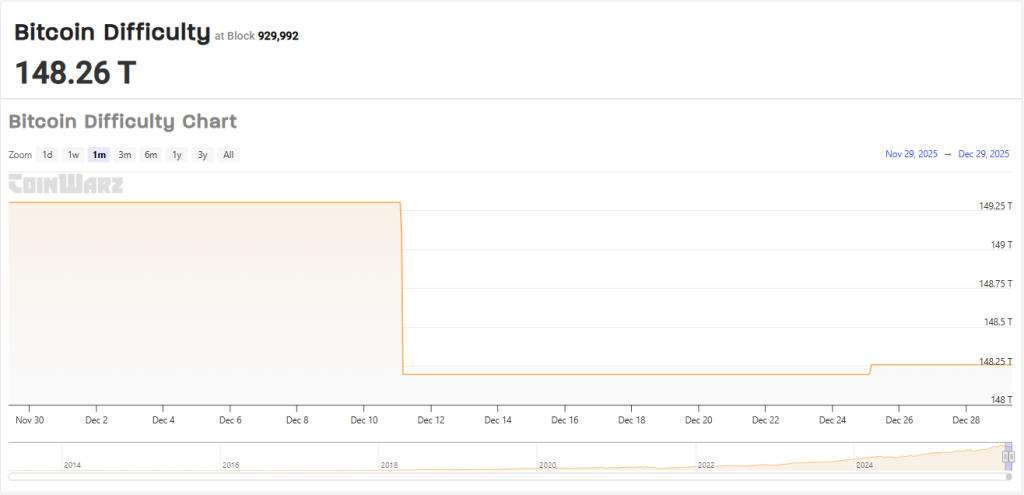
Source: CoinWarz
Historical Context And Market Moves
Mining difficulty has climbed to new highs during 2025, with two sharp jumps in September coinciding with Bitcoin’s price surge earlier in the year.
Bitcoin hit $125,100 in October before experiencing a significant drop. As prices rise, more mining rigs enter the network, which increases total computing power and prompts difficulty to adjust upward.
Miners’ Costs And Network Security
Higher difficulty means miners need more computing power and energy to solve blocks. This raises costs and can squeeze profit margins, especially for smaller operations.
At the same time, the system protects the network from centralization. If one miner or a group controlled too much computing power, they could dominate block production or even attempt a 51% attack. By adjusting difficulty, the network keeps mining distributed and secure.

Outlook From The Investment Side
According to Bitwise CIO Matt Hougan, Bitcoin may deliver steady growth over the next 10 years rather than massive yearly gains.
He told CNBC that he expects “strong returns” with moderate ups and downs. Hougan also maintains that 2026 is likely to be a positive year for Bitcoin, reflecting the network’s resilience after recent highs and volatility.
The rise to above 148 trillion is not dramatic but will slightly tighten miners’ margins. Tracking block times, hash rate, and difficulty can give insight into short-term mining profitability.
For investors, difficulty trends also indicate the real-world effort securing Bitcoin, which influences supply and potential selling pressure.
The network’s difficulty adjustments are routine but vital. They ensure coins are released steadily, miners remain challenged, and Bitcoin’s decentralized design is preserved.
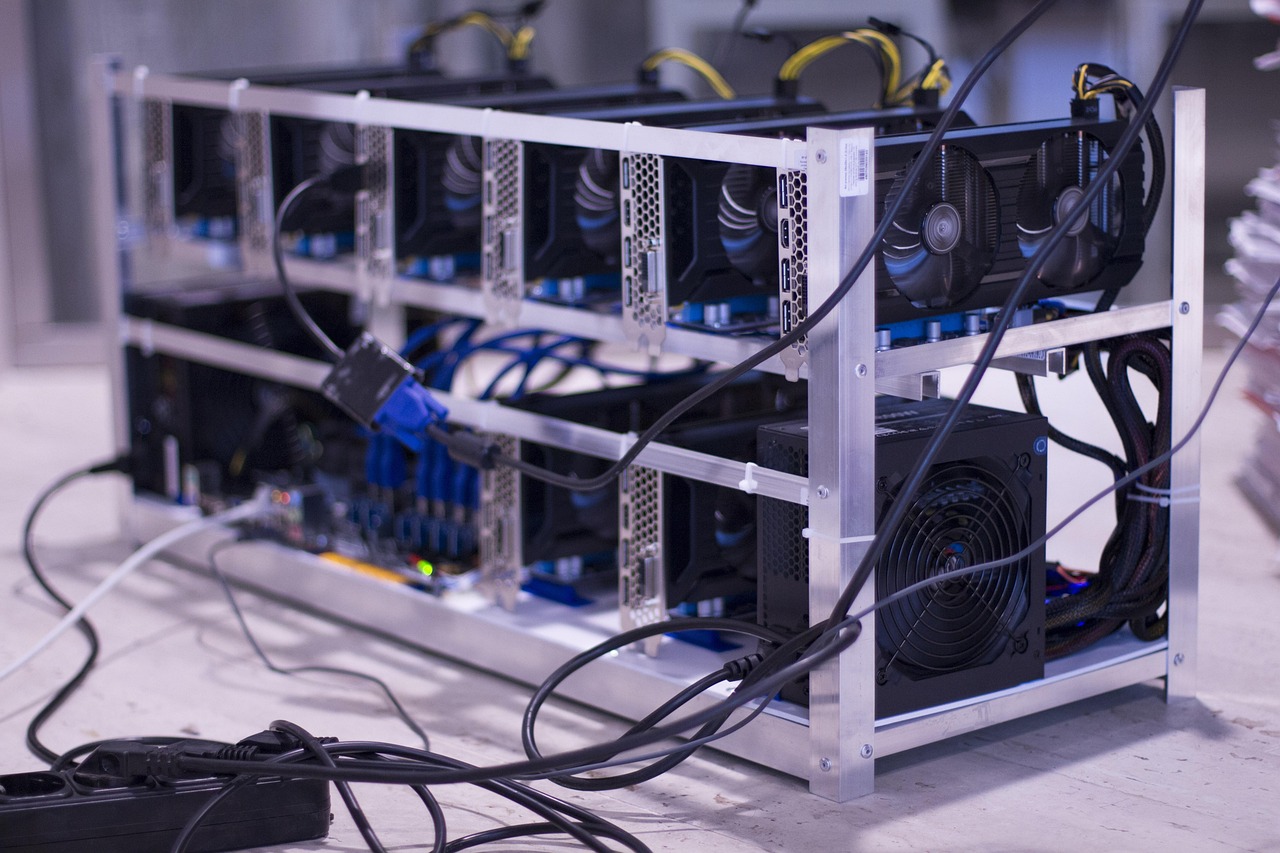
Featured image from Pixabay, chart from TradingView

Editorial Process for bitcoinist is centered on delivering thoroughly researched, accurate, and unbiased content. We uphold strict sourcing standards, and each page undergoes diligent review by our team of top technology experts and seasoned editors. This process ensures the integrity, relevance, and value of our content for our readers.
 Bitcoin
  Ethereum
  Tether
  BNB
BNB  XRP
XRP  USDC
USDC  Solana
  TRON
TRON  Figure Heloc
  Zcash
Zcash 